
Kathi & Stefanie
"One room after another"
We are Kathi (41) and Stefanie (48), married, in love, happy, and often just tired. Our son Lio is 7 years old and has ADHD.

"One Room After Another"
We are Kathi (41) and Stefanie (48), a lesbian couple, and we have a child, Lio (7), with ADHD. We love our family life – and at the same time, there are days when it feels like everything is happening at once: school, appointments, arguments over socks, sudden anger, then great closeness again. Not because Lio "doesn't want to," but because stimuli, impulses, and emotions are sometimes faster than all plans.
What exhausted us most was this constant feeling of never being finished. You tidy up briefly, turn around – and it's chaos again. And the messier it gets, the harder it becomes for everyone: for Lio, because it's even more stimuli. For us, because we always feel like we're falling short.
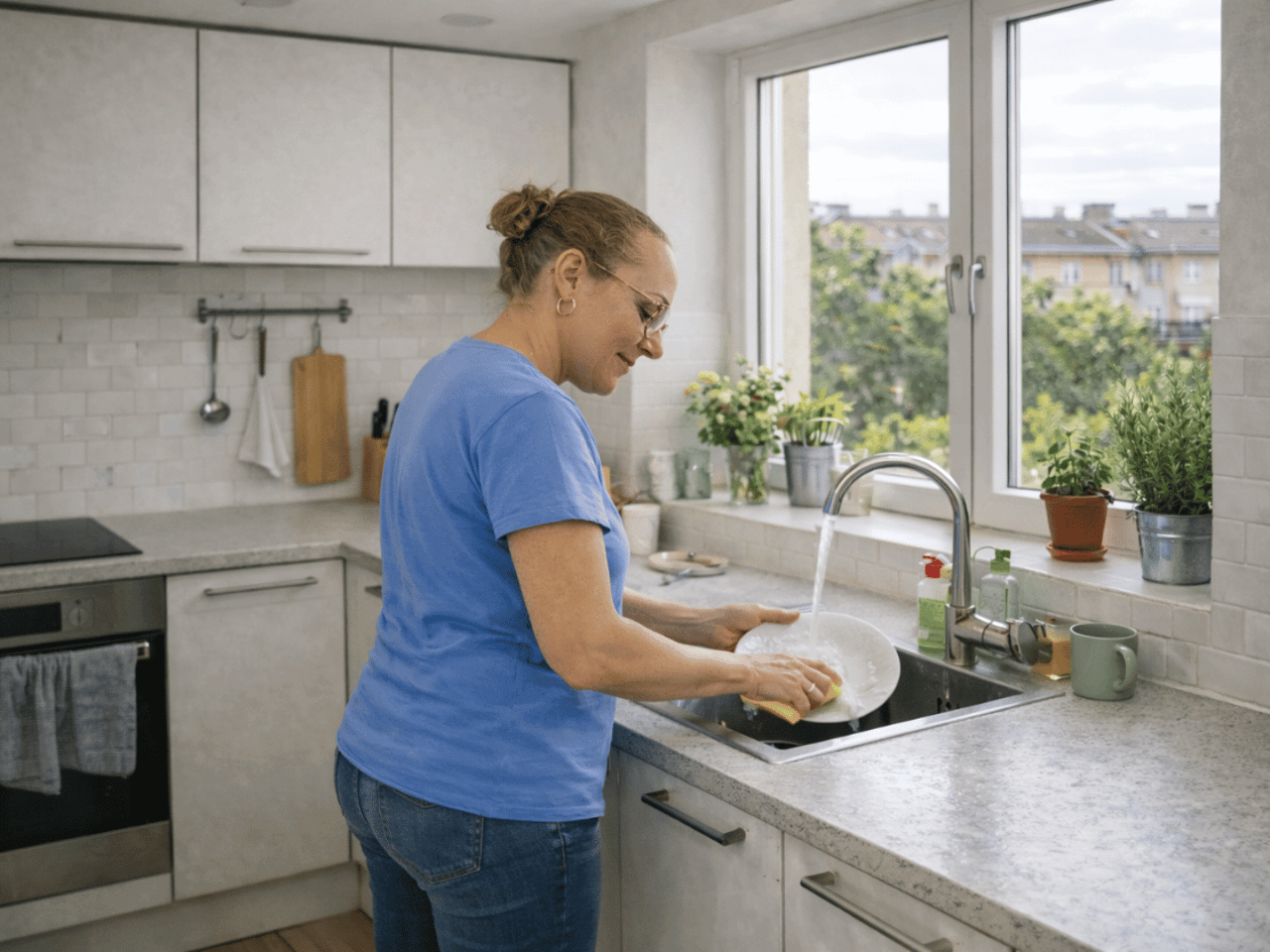
Then Hatice came as a daily helper. And Hatice didn't give long speeches. Hatice just started – calmly, kindly, clearly. Hatice does one room with each visit. Not five things at once, not "we really need to get this done properly now," but: one room is truly finished. That sounds small, but it's huge. A tidy living room or a clean kitchen changes the mood in the whole home.
And the second thing that immediately helped us: Hatice also plays with Lio sometimes. Just like that. Without a program, without a pedagogical tone, without judgment. Sometimes it's 20 minutes where we can catch our breath. A coffee, a moment to sit, a moment of quiet. And Lio feels: There is someone who is there, without demanding anything.

Small steps, big impact
Since Hatice arrived, we feel that our everyday life is more manageable again. Not perfect. But in a way that we're not at our limit every day. It's good that Hatice takes on exactly what has the biggest effect for us: order in a specific place – and occasional relief because Lio gets attention that remains calm.
And what is just as important for us as a family: With Hatice, we don't have to explain anything. Neither that we are a lesbian couple, nor that ADHD is not "bad upbringing." It's about respect, good cooperation, and practical help that really makes a difference in everyday life.

What you get with AlleFarben
We offer you practical help and a respectful approach that takes diversity into account. We are respectful and discuss everything clearly with you so that you can feel safe in your home.

Respect & Queersensitivity
You don't have to explain yourself. We ensure a discrimination-free environment and a good feeling in your home

Everyday relevance & Flexibility
You receive practical support that is fully oriented to your everyday life. We know that every day is different and want to offer you exactly the help you need without overwhelming you.
Clear Agreements
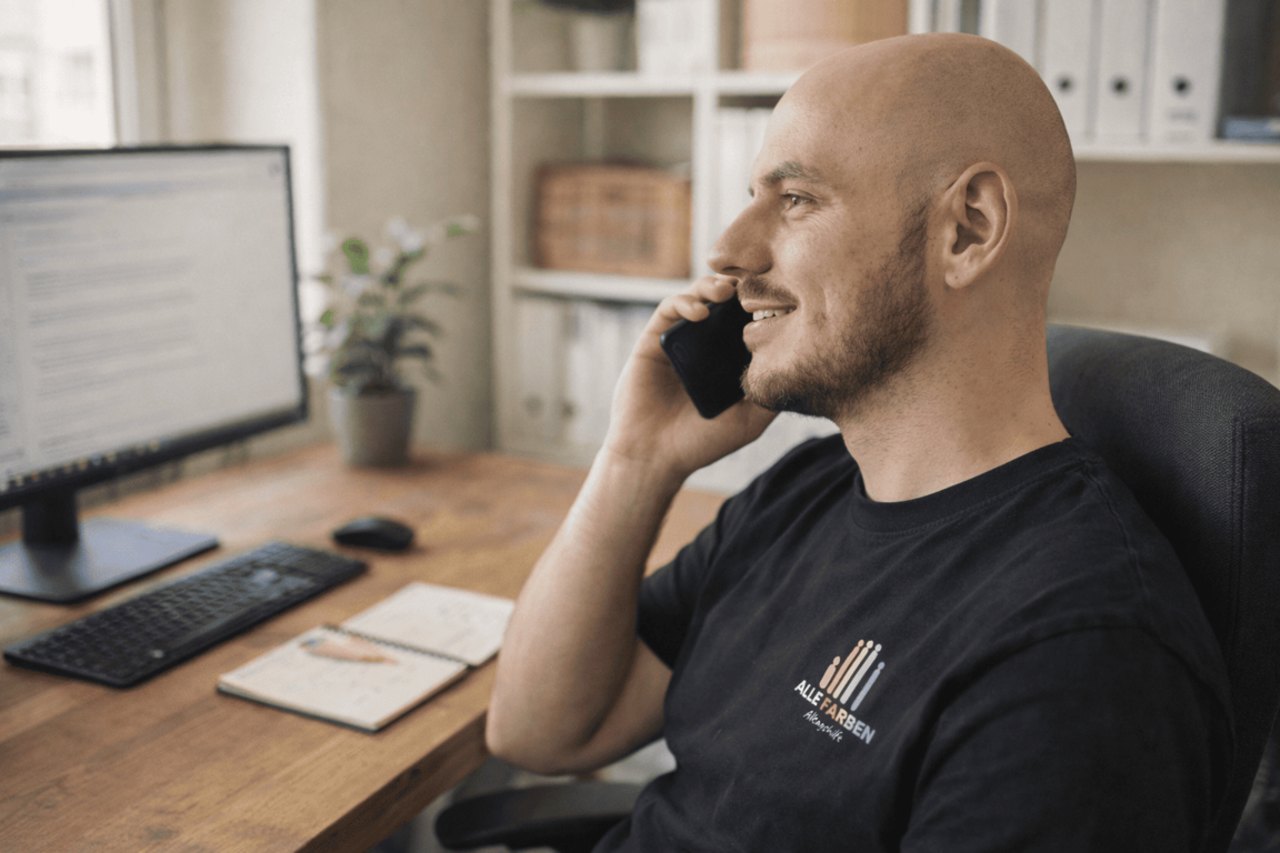
Together we clarify requirements, scope, and process, so that support becomes reliably plannable.
What makes us special – From the community - for the community
LGBTI* people, in particular, frequently report discrimination, a lack of sensitivity, and a lack of understanding in household services and care contexts. We know these experiences from our own lives – as lesbian, gay, bi, trans, and intersex people and from our many years of work in the field of care and counseling. We founded AlleFarben Alltagshilfe to offer reliable, discrimination-free, and diversity-sensitive support. Our work is based on respect, transparency, and the knowledge of how important a safe space in one's own home is.

We are part of the LGBTI* community.
We know what matters when trust and respect are non-negotiable – and we work in a way that you don't have to explain yourself.
Experience in Care & Consulting
More than 10 years of experience in care consulting and counseling contexts, including gay counseling. Many of our team members have worked in care and bring practical knowledge.
Networked
We are networked in Berlin and nationwide to make queer care and queer-sensitive everyday help visible - We are, among others, in exchange with BISS e. V., RUT Berlin, LesLeFam, Mann-O-Meter, the Schwulenberatung, etc...
Visible
We regularly bring the topic to the public – e.g. in specialist articles in the Siegessäule, at specialist events, in the nursing podcast "Mein Pflegecafé" and in nursing training.
Committed
We engage in exchange with politics and specialist bodies, e.g. with state care commissioners, and contribute to strategies and measures for greater safety of queer people in healthcare.
Your benefits with queer-sensitive everyday help in Berlin
§ 45a SGB XI recognized
As a recognized service for daily support, you can bill many services through long-term care insurance benefits (e.g., relief amount).
We are proud of the positive feedback from our clients, who appreciate our empathetic and professional support.
More reviews hereAvailable city-wide in Berlin
We are there for you in Berlin! Our focus is on respectful and personal care that is tailored precisely to your needs.
Sensitivity & Respect
Our helpers are specially trained to understand and respect the needs of the LSBTIQ+ community.
Suitable for your everyday life
Together we discuss which services you need and what rhythm suits you best.
Local reference
We are well connected in care and support structures. In this way, we bring the topics of everyday help and queer care further into the community, to other support services and into politics.
Security & Trust
All our employees are carefully selected, trained and have the necessary qualifications.
Testimonials from our customers
True stories from people who have experienced our caring and respectful daily support.
Renate tells us how, with Betty's support, she now receives reliable and respectful help at home.

Jürgen reports how the support helps him in everyday life. The regular accompaniment helps him to complete daily tasks and contributes to more independence and a better quality of life.

Sasha tells how supportive accompaniment helps to create everyday structures without overwhelming.

They are married and live with their 7-year-old son Lio, who has ADHD. They report how reliable daily help relieves their family and allows them more peace and structure in everyday life.
Frequently Asked Questions
Here you will find answers to the most common questions about our services. We want to make all important information easily accessible to you.
What often helps most: concrete, manageable goals per appointment (e.g., "one room finished," "reset kitchen," "laundry run + put away"). It's important not to open too many construction sites at once. This reduces overstimulation, creates visible order, and improves the mood in the entire household. Relief also means: parents get short, real breaks instead of constantly moderating. Everyday help is effective when it remains realistic and doesn't create the feeling, "now everything has to be perfect."
Let's talk about your situation and find support
We are there for you when you need us. Whether you need help with household chores, accompaniment to appointments, or support with organization and documents: Our everyday helpers are by your side. Together we will find a solution that suits you and your everyday life.
Request help now- Individual everyday assistance throughout Berlin
- Reliable everyday help
- Transparent pricing with no hidden costs